
Running a Sex Offender Check in Oconee County
The official starting point for an Oconee County sex offender check is the Oconee gateway to South Carolina SORT. SLED manages the central registry, while the Oconee County Sheriff carries out local registration and verification duties. The gateway is county-branded, but it connects to the state system. No separate public list maintained only by the sheriff was documented in the official research.
Prepare either a name or a place before searching. A name search is useful when the registrant is known. A geographic search is better for awareness around a street, city, ZIP code, or Oconee County location, though the exact map and radius choices appear only after the gateway. Search results are public leads, not real-time guarantees. SLED cautions that an address or status can lag, so an uncertain Oconee registry result should be checked with SLED or the sheriff.
Oconee SORT CAPTCHA Choices
The Oconee County SORT gateway requires a CAPTCHA before the registry tools open. This gate is part of the official search, not a fee screen. It also means automated copies of field labels may be incomplete. The opening screen visibly offers Geographic Search, Name Search, Community Notifications, FAQs, Resources, Contact Us, and SOR Removal.
The official Oconee SORT gateway shows how the county search begins:
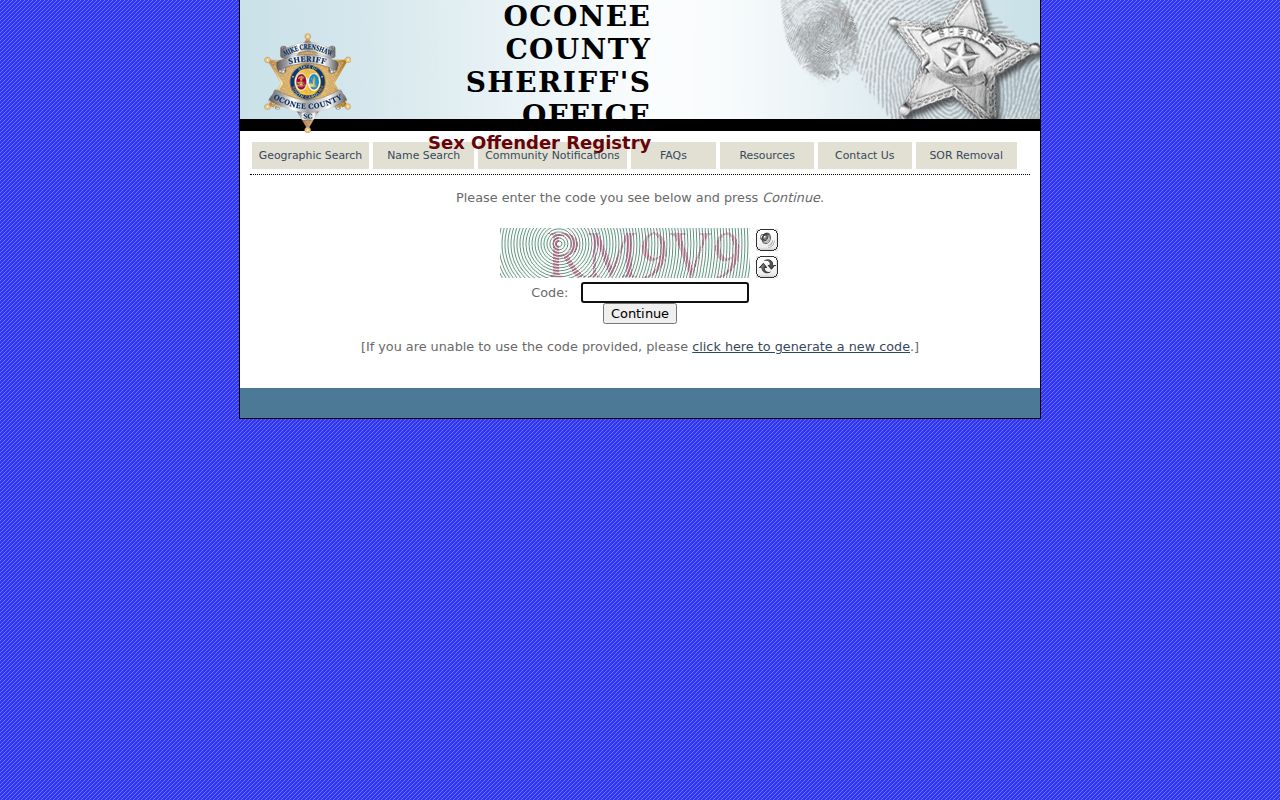
The captured screen confirms the CAPTCHA step and the available Oconee County registry routes without exposing a private registrant's identity. SLED recommends a current version of Edge or Chrome because Firefox and Safari may not behave as expected. If the code does not render, use the gateway's regenerate or accessibility option rather than an unofficial registry copy.
Searching the South Carolina Sex Offender Registry
SLED's State of South Carolina Sex Offender Registry Tool is the official public system for Oconee County entries. The interface separates a person-based query from a place-based query and keeps notifications in their own tab. Exact controls behind the CAPTCHA can change, so use only the labels shown in the current live interface.
- Open the Oconee County gateway, read the conditions of use, complete the CAPTCHA, and continue to SORT.
- Choose Name Search for a known person or Geographic Search for an Oconee County place. Enter only the details the live form requests.
- Compare the returned name, aliases, photo, physical details, and location context. Do not rely on a name match alone.
- Open the full public profile, note its registration and compliance data, then contact the Oconee County Sheriff or SLED if a key fact appears wrong.
| Search Control | Type | Required | Use |
|---|---|---|---|
| CAPTCHA Code | Text | Yes | Opens the registry gateway; an accessibility link can generate a new code |
| Geographic Search | Tab | No | Starts an address or map-based Oconee County lookup after acceptance |
| Name Search | Tab | No | Starts a registrant-name lookup |
| Community Notifications | Tab | No | Opens the alert enrollment route |
| FAQs / Resources | Tabs | No | Explains registry rules and provides help |
| SOR Removal | Tab | No | Provides information about statutory removal |
The research did not expose exact post-CAPTCHA name, address, or radius labels. Read the live Oconee County form rather than assuming those controls or their required status.
Oconee SORT Versus NSOPW
SORT and the federal National Sex Offender Public Website answer different location questions. Use Oconee County SORT when the focus is a South Carolina profile, the state registry's current public fields, or enrollment in its Community Notifications tool. Use NSOPW when an address near a state line or a person who may have lived elsewhere requires a search across participating jurisdictions.
The U.S. Department of Justice NSOPW search provides that national layer:
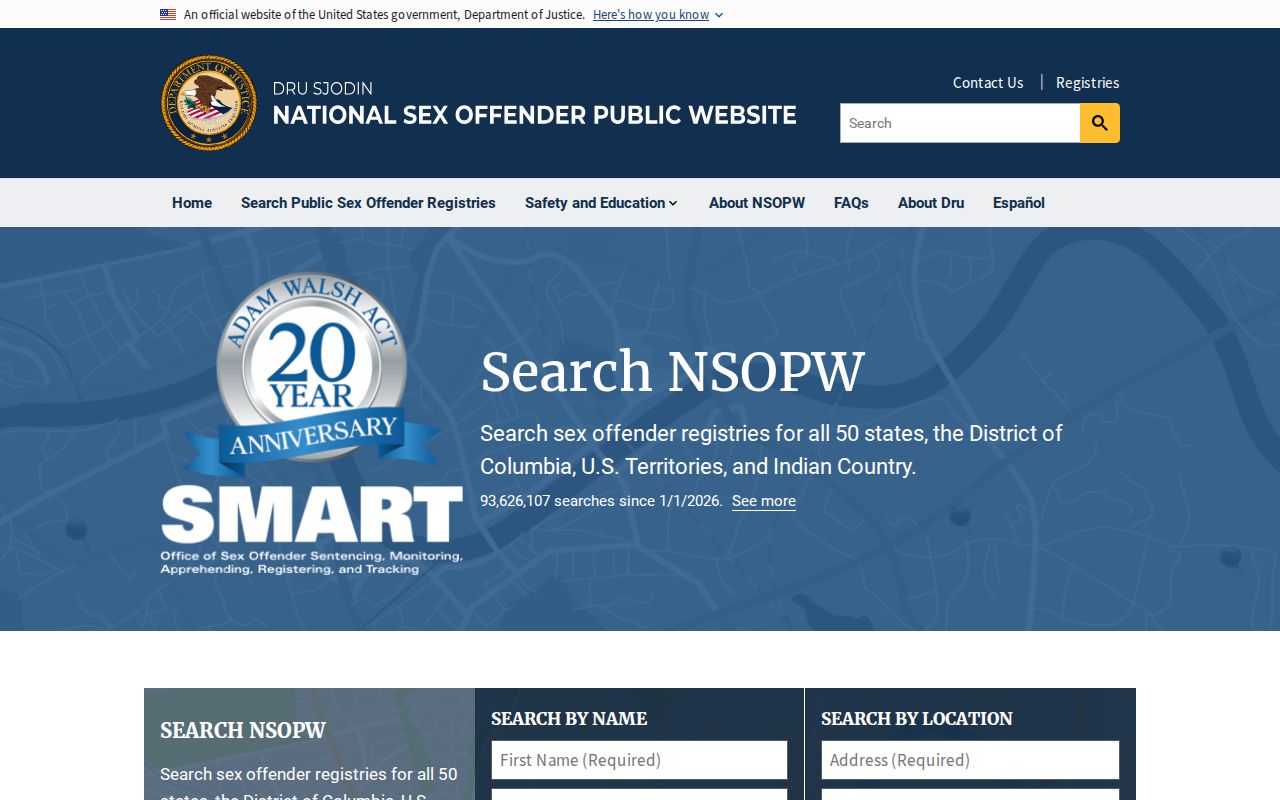
The national screen can broaden an Oconee County registry search, but it does not replace the local SORT profile or the Oconee County Sheriff's verification role. A cross-state result should be read in the jurisdiction that supplied it. Neither tool should be treated as a complete historic criminal record or a substitute for a court case file.
What a Registry Profile Shows
An Oconee County public registry profile is built to identify the listed person and explain the registration basis. It may include several kinds of location and status information. The research preserved the field schema without copying any private person's values. Portal presentation can change, and the state tier defined by law may not always appear as a simple public label.
| Name & Aliases | Legal name and any aliases the public system is authorized to display |
|---|---|
| Photo & Physical Description | Photograph, sex, race, age or birth details at the allowed level, height, weight, hair, eyes, marks, and tattoos |
| Registered Locations | Residential, work, or school addresses when South Carolina law makes them public |
| Offense & Statute | Qualifying offense, conviction jurisdiction and date, and the cited offense law |
| Agency & Vehicles | Registering agency and vehicle details when included in the public profile |
| Registration Status | Compliance or other published status data available in the live Oconee County entry |
A profile is not a full account of every arrest, charge, or case outcome. For that history, the case-focused route is the Oconee County criminal court case search. Keep the profile's stated conviction jurisdiction in view because an offense from another place can still appear in the South Carolina registry.
When Oconee Registry Addresses Lag
SLED warns that registry information is information of record and may not reflect a person's current residence or status. That warning matters in Oconee County because a map marker can look more precise than the underlying update cycle really is. A pin is a reported data point, not proof that someone is present at that spot at the moment of the search.
The SLED registry information page states the public warnings and gives a correction channel:
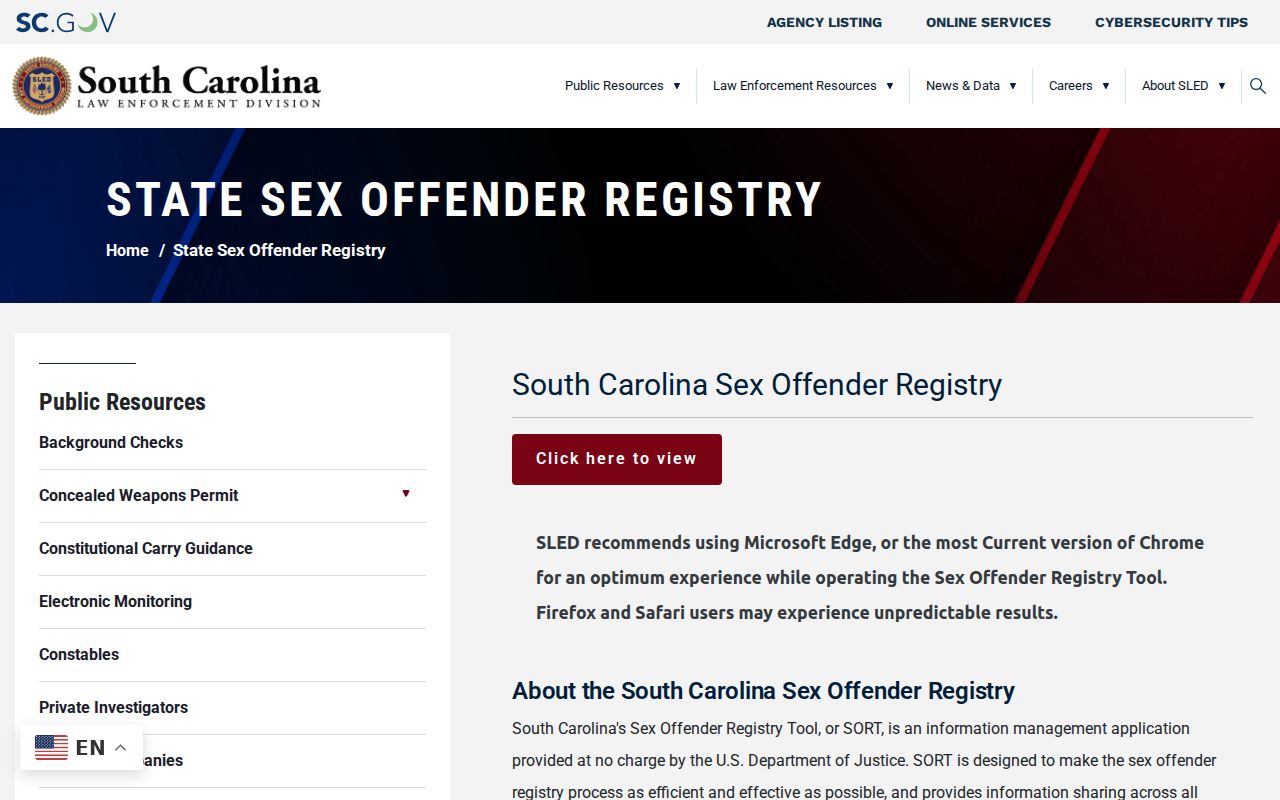
If an Oconee County profile seems wrong, record the public profile details and explain the disputed field to SLED CJIS SOR. The state contact is P.O. Box 21398, Columbia, SC 29210; 803-896-2601; fax 803-896-2311; or sor@sled.sc.gov. Do not contact or confront anyone at the listed address. Possible noncompliance belongs with the Oconee County Sheriff or SLED SOR.
Registration Requirements and Levels in South Carolina
South Carolina law divides qualifying offenses into tiers and provides distinct removal paths. The Oconee County Sheriff performs local registration and verification work, while SLED runs the state registry and reviews removal material. The current code matters because 2025 Acts 57 and 58 amended the tier and removal rules. Older summaries of the 2022 reform may no longer state the full current process.
| Tier | Duration / Removal Timing | Visibility and Verification |
|---|---|---|
| Tier I | Generally at least 15 years before a qualifying administrative removal route | Public while registered; confirm the current verification schedule with the sheriff |
| Tier II | Use current S.C. Code §23-3-462 for the amended period | Public while registered; the reviewed source did not publish Oconee appointment frequency |
| Tier III | A judicial-motion route may be available after 30 years under §23-3-463 | Public while registered; SLED review and statutory conditions apply |
The time shown is not an automatic expiration date. SLED performs fingerprint-based state and federal checks and reviews proof of required treatment and compliance. A failure-to-register conviction in the prior ten years or another sexual or violent sexual offense can bar the route described in the research. The filing fee may not exceed $250, SLED has 120 days in the statutory process, and a denial can generally be renewed after five years.
Oconee Registry Reform in South Carolina
Act 221 of 2022 marked a shift from South Carolina's former blanket lifetime framework by creating tier-based removal routes. The change did not erase registry duties across Oconee County. It created administrative and judicial paths that depend on the offense tier, time calculation, treatment, compliance, new-offense history, and SLED review.
The current South Carolina registry code is the controlling source for the tiers and removal process:
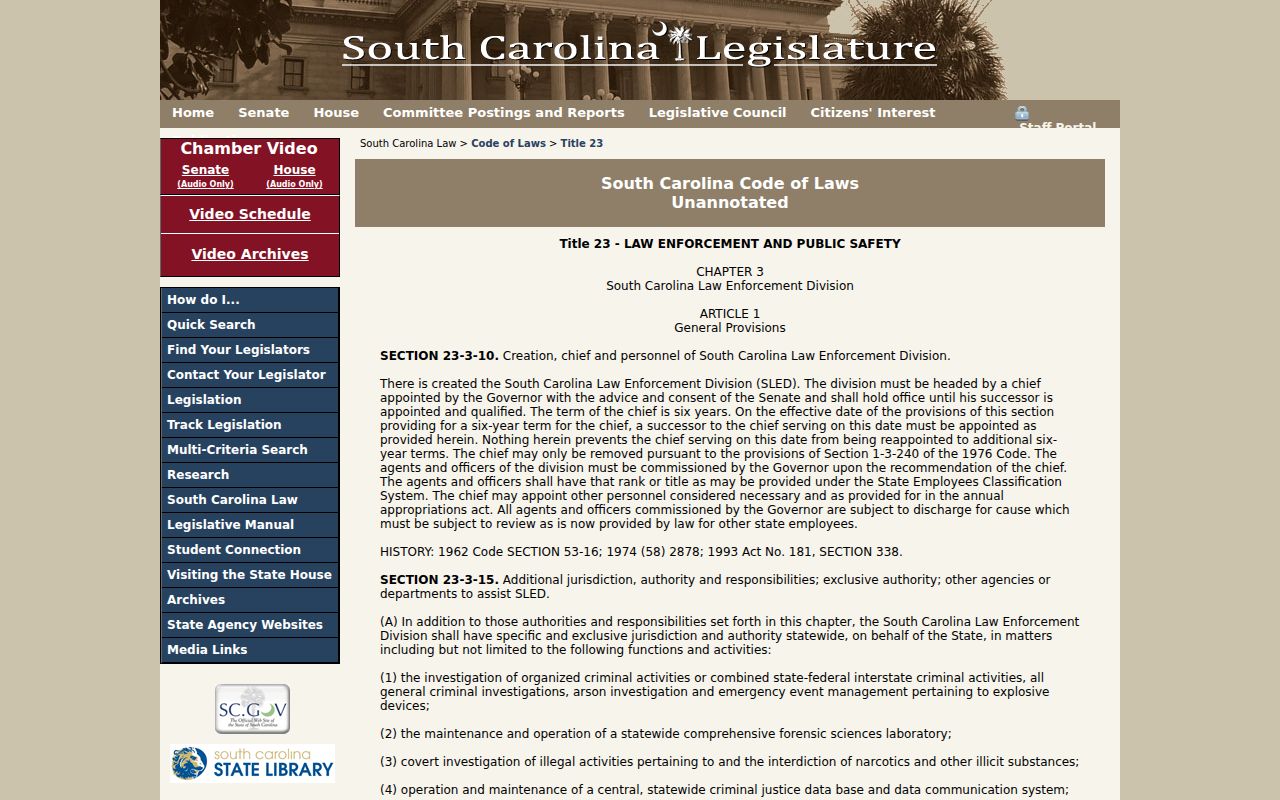
The statute capture connects Oconee County registry duties to the current statewide rules. It also shows why a person seeking removal should not rely on an old article or assume that time alone ends registration. The official SOR Removal tab and SLED review process should be paired with the live code. A lawyer can address how a specific conviction and supervision history fit those rules.
Oconee Registry Community Notifications
Community Notifications is a named tab inside the Oconee County SORT gateway. It is the proper route for a resident who wants continuing awareness instead of repeating the same manual lookup. Enrollment details appear after the gateway, so follow the live prompts and confirm the area or address tied to the alert before submitting.
An alert is a notice to check the official registry. It is not a finding that a crime occurred, a promise that every move will appear at once, or permission to act against a listed person. If a notification and an Oconee County profile conflict, use the profile's registering-agency data and contact SLED or the sheriff for confirmation. NSOPW remains useful for a separate national check, especially when the place of concern crosses South Carolina's border.
Lawful Use and Community Notification
The South Carolina registry exists for public safety awareness. A lawful Oconee County sex offender check can help a family understand the official information tied to a neighborhood or address. It should lead to calm verification and ordinary safety planning. It must not lead to threats, intimidation, harassment, or vigilante conduct. Report suspected noncompliance to the Oconee County Sheriff or SLED SOR rather than approaching the listed person.
Misuse can be a crime: S.C. Code §§23-3-400 through 23-3-550 govern registry access and use, and SLED warns that using registry information to unlawfully injure, harass, or commit a crime against a registrant or anyone at a reported address can bring civil or criminal penalties.
The same care applies to errors. A wrong or stale address can affect people who are not registrants. Keep a note of the profile, search time, and disputed field, then use SLED's correction contact. For immediate safety threats, call law enforcement. For routine questions about Oconee County registration or verification, contact the sheriff's office and ask for its current SOR unit process and appointment details.